
Freyja's Tears
magick in a world of wounds

I’ve just returned from gathering fallen Cedar and Pine from the forest to burn to help move grief and carry prayers for the suffering people of Iran when I teach tonight. Inspired by the beautiful sharing of another about her own ways of working magick in times of grief and terror, I want to share two pieces of writing — the first prose and the second poetry — that both flow from a single experience and speak to my own ways of working with wild kin to respond to the destruction human governments unleash.
The first piece, which gives the context, comes from The Silver Branch and the Otherworld:
Wherever there is soil and water, there are forests waiting to be reborn.
Along the Pripyat River in Ukraine, in the wake of the Chernobyl disaster, forests expanded to swallow up abandoned towns, and the Wolf and the Wild Boar have returned. For me that forest has come to symbolize the power of the wild to heal and transform even the most devastated landscapes when civilization gets out of the way.
That hope became a bit more fragile for me the day that I learned that forest was burning, set aflame by Russian artillery. As I read the news of those fires, I heard a Pileated Woodpecker drumming on a Spruce across the snowy yard.
Later that afternoon I was called to do a ritual for the healing of the Red Forest of Chernobyl. I found windblown Birch bark on the ground—a tree that connects me with the forests of Ukraine as well as my Irish and Swedish ancestral forests—which I gathered to use in place of an altar cloth. Then, I went to the old Spruce.
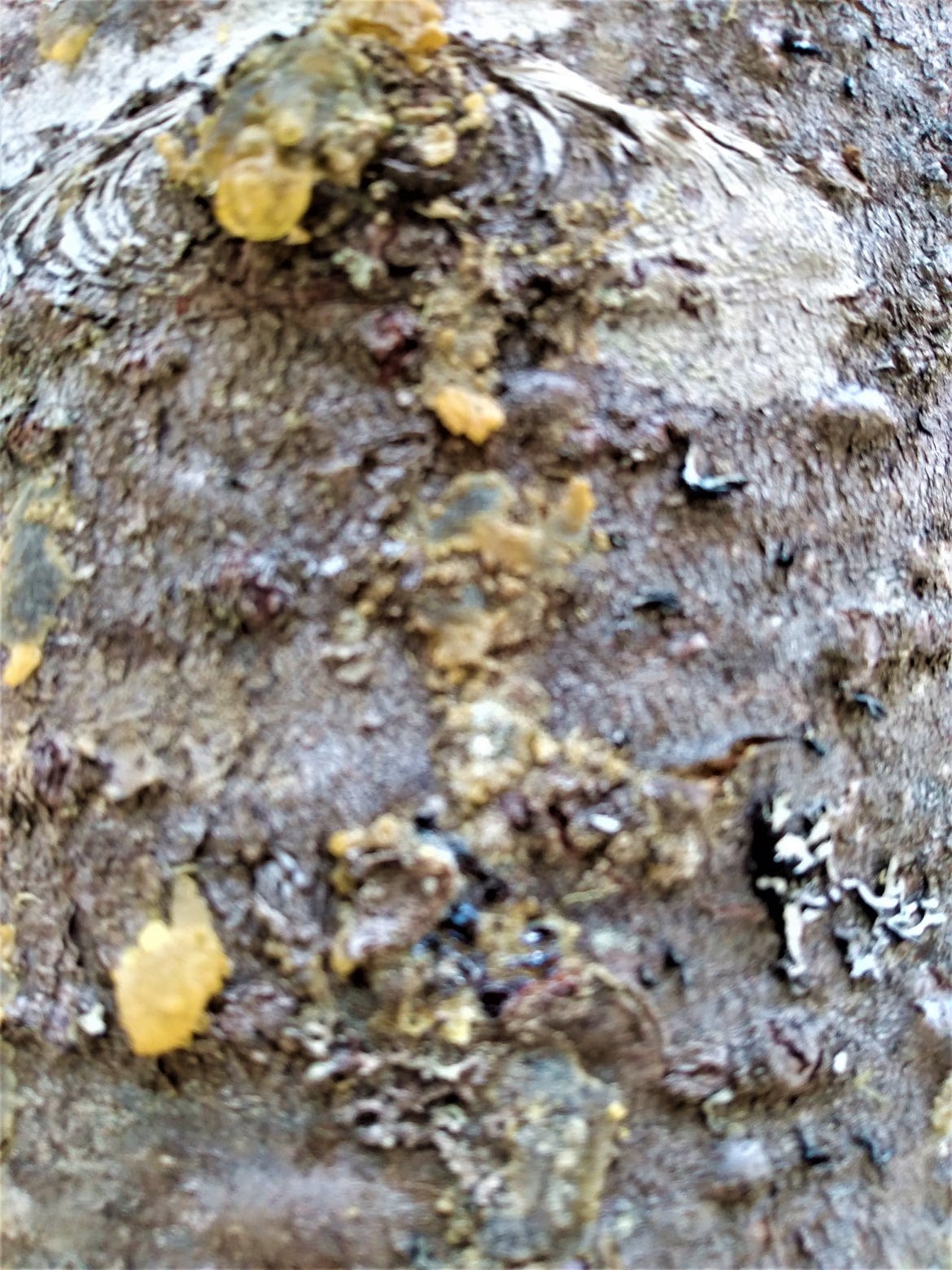
Where the Woodpecker had been drumming, the Spruce had poured out an amber resin—the color of the tears the Norse goddess Freyja, life of the land and teacher of the oldest magics, weeps. I lightly scraped the tree with the edge of a knife blade and gathered the golden tears in my hand.
At dusk, I spread the Birch bark out on my altar, lit a beeswax candle from a local beekeeper, heated a coal in my incense burner, and sprinkled the Spruce resin over the coal, calling forth a sweet cloud of smoke. I focused first on the flame of the candle and then on my heartbeat, calling up the memory of the Woodpecker’s rhythm. I picked up my bodhrán, an Irish frame drum, and began playing the rhythm that memory stirred in my heart while holding the vision of the burning Red Forest being green again.
The Birch, the Spruce, and the Woodpecker had joined me in my prayer. And the first thing you must understand is that I am not speaking metaphorically.
My rite was not about my Will alone—it was the alignment of my Will with the living Will of the land. The Birch, the Spruce, the Woodpecker were part of an ecological community that holds the living knowledge of regeneration. My role was to bring the knowledge of distant fires to this place and ask for help.
The knowledge of those distant fires had changed the rhythms of my heartbeat and my breath and the pheromones my body was sending out as messenger molecules, taken in by trees that were inhaling my exhalations. The chemistry of the trees subtly changed in response, and so did the chemistry of the resins released by the drumming of the Woodpecker. And the bodies of the Woodpecker and I both responded to the aromatic molecules that wafted into the air from the resin, as did the other trees.
The biology of my own consciousness is a variation on the form of the mind of a forest. Trees and understory plants send down rhizomes, which intertwine with the mycelia that evolved to connect them, forming networks of filaments that carry chemical and electrical signals, allowing the land to experience itself simultaneously as myriad beings and one mind.
Human nervous systems, like all animal nervous systems, are networks of filaments, kin in form and function to the mycorrhizal networks that are the minds of forests and fields, contained within individual bodies. It was only very recently that we began to forget this, though there were always some cultures and communities and people who held on to this knowledge and allowed it to be the bedrock of their sense of being.
Something so recently forgotten can easily be remembered if we allow ourselves to open to it.
The trees of western Maine where I live are part of a forest with its own stories of resilience. Cut first to provide timber for the British navy a century after the forests my Irish ancestors loved faced the same fate, and then again and again to provide pulp for paper mills. Western Maine remained, in many ways, a colony of the logging and paper industries until the trade agreements of the early 2000s sent those industries south to Brazil. The forest has kept coming back. And while Wolves may not have returned here fully, though some believe they have begun to, I am serenaded at night by their descendants, Eastern Coyotes, a new species that evolved from the mating of Western Coyotes and Gray Wolves in Quebec.
As part of second- and third-growth forests, the trees around me know things I cannot know about how a forest regenerates after disaster. Having spent years cultivating a relationship with them, we are familiar with each other. So I call on them to help me shape my prayer, my spells, and my magic for a distant burning forest.
My relationship with them has changed what I understand magic to be. It has brought me to an understanding of magic that is wilder and older than most of what I have encountered in the modern Pagan world. And it is wilder, older magics that we need to remake worlds— and a living medicine that can help us remake ourselves.
That night, I wrote this poem, which appeared in Courting the Wild Queen:
The Spruce
weeps resin
the color
of Freyja's tears,

the color
of the honey
that flows
from her womb,

the color
of the scent
of your soul:

drink in
the elixir
with your
every breath
this night

and it will
nourish you
through months
of winter
still to come.
That one of these passages reflects anguish and the other reflects joy is no contradiction and no mistake. The tears of grief, the tears of rage, the tears of laughter, the tears of love, the tears in the presence of unspeakable horror, the tears in the presence of unspeakable beauty, are one and the same.
Aldo Leopold wrote ““One of the penalties of an ecological education is that one lives alone in a world of wounds.” When we weep together with each other and with the trees, we are no longer alone. And then the healing can begin.
So beautiful.
Beautiful